AIoT
 Arduino
A Radar Scope on the Arduino UNO Q: Multi-Target Tracking with the Ai-Thinker RD-03D mmWave Sensor
UNO Q with a 24 GHz radar wired to the board to build a live radar scope - the MCU turns a binary sensor stream into three tracked targets, and the Linux side draws them sweeping across a web dashboard. Along the way, a proper look at how FMCW radar works, all showing the strength of mmWave radar.
 Derek Molloy
·
Aug 10, 2026
·
73 min read
Derek Molloy
·
Aug 10, 2026
·
73 min read
 Arduino
Under the Hood of the Arduino UNO Q: Vanilla Zephyr on the Cortex-M33
Part three of the UNO Q series removes the App Lab, Arduino core, sketch loader and just uses west, a devicetree, and our own Zephyr firmware on the board's STM32U585, driving the 13x8 LED matrix through Zephyr's display API with grayscale functionality.
Derek Molloy
·
Jul 30, 2026
·
50 min read
 Embedded
How Charlieplexing works: an interactive demo
Eleven pins, 104 LEDs, and a scan you can slow down until the trick falls apart. An interactive walkthrough of the Arduino UNO Q's charlieplexed matrix, built from the board's own devicetree.
Derek Molloy
·
Jul 29, 2026
·
28 min read
 OpenMV
The OpenMV AE3: A Time-of-Flight Doorman for the NPU
Part two of the OpenMV series shrinks the board and the power to a quarter of a watt, while running YOLO. Built on Alif's Ensemble E3 with two Cortex-M55s and two Ethos-U55 NPUs, the AE3 also carries something its bigger sibling does not, a VL53L8CX 8x8 ToF depth sensor.
Derek Molloy
·
Jul 26, 2026
·
42 min read
 OpenMV
The OpenMV N6: A MicroPython Camera with a Real NPU
The OpenMV N6 pairs an 800 MHz Cortex-M55 with ST's 600-GOPS Neural-ART NPU and a removable global-shutter camera, and MicroPython - YOLO object detection at 30 fps, in Python, under a watt. We tour the hardware properly, walk through setup, and build a people-counting application on the NPU.
Derek Molloy
·
Jul 24, 2026
·
25 min read
 Arduino
A Real Dual-Brain Application on the Arduino UNO Q: an AI Brick, a Camera, and a Presence Lamp
Part two of the UNO Q series puts the board's dual-brain design to real work - a vision AI Brick on the Linux side detects a person through a camera, and the microcontroller side turns that into a smoothly breathing lamp that never stutters, no matter how hard the AI is working.
Derek Molloy
·
Jul 22, 2026
·
19 min read
 Arduino
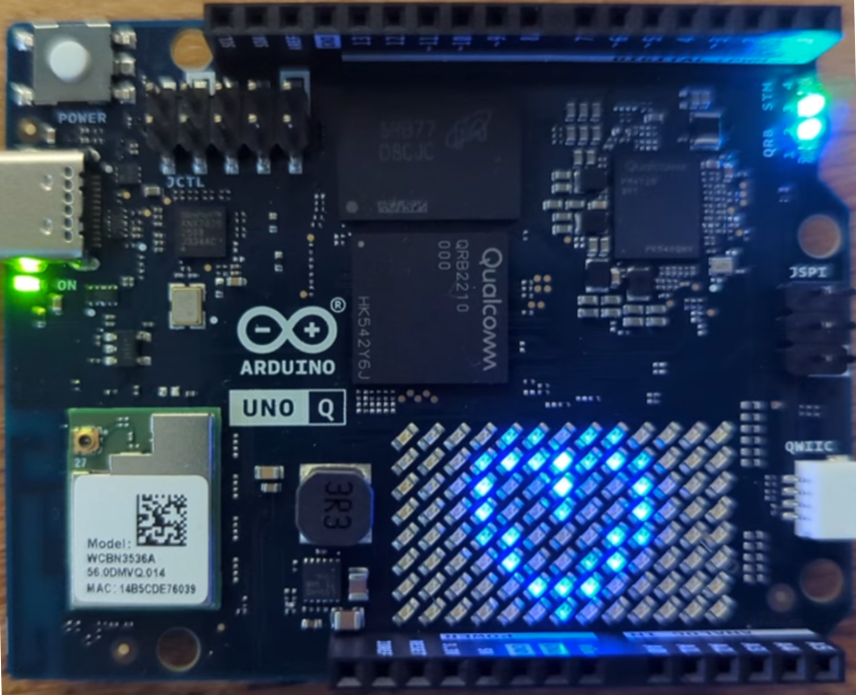
Getting to Know the Arduino UNO Q: Two Brains, One Board, and Zephyr Underneath
The Arduino UNO Q pairs a quad-core Linux processor with a real-time STM32 microcontroller on one UNO-shaped board, and quietly runs Zephyr where the classic Arduino runtime used to be. This guide takes an engineer's look at the architecture.
Derek Molloy
·
Jul 21, 2026
·
30 min read
 Edge-AI
From TinyML to Tiny Language Models: the State of Edge AI in 2026
A field guide to state-of-the-art edge AI in 2026, covering the models that now run on small devices, the neural accelerators that make them possible, and federated learning, grounded in the low-cost hardware used throughout this blog.
Derek Molloy
·
Jul 10, 2026
·
20 min read